Composite Cladding Around Windows Profile Design Control
As a WPC extrusion mold design engineer, I consider window cladding profiles a balance between structural strength, material efficiency, appearance, and installation requirements. Composite cladding around windows is exposed to temperature changes, moisture, wind pressure, and repeated maintenance cycles, so the profile design must be verified before mass production. The extrusion mould determines the final geometry, and even small changes in wall thickness, cavity layout, or surface pattern can influence the performance of the finished product.
Material testing begins with checking the relationship between profile shape and mechanical behaviour. Solid WPC structures generally provide higher impact resistance and better screw holding strength because they contain more material in the load-bearing area. However, they also increase weight and production costs. Hollow structures reduce raw material consumption and make installation easier, but the internal design must maintain enough support to prevent deformation during transport and fitting.
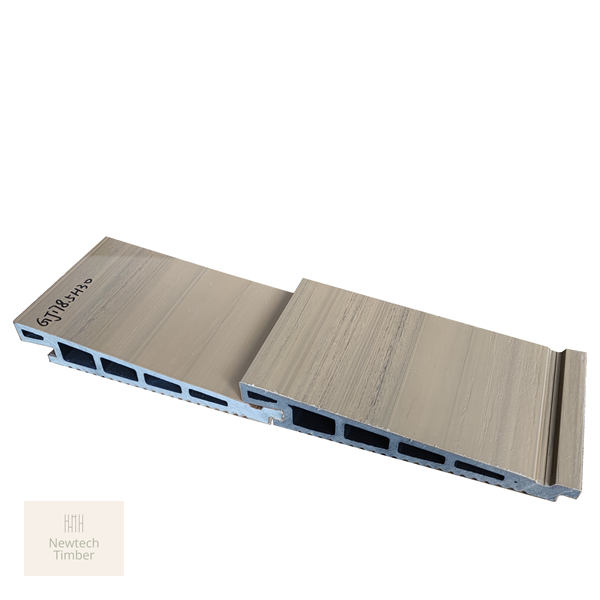
Hollow and Solid Structure Performance Testing
Hollow WPC profiles require detailed engineering of internal chambers. The number of cavities, cavity size, and wall thickness distribution affect bending strength, thermal movement, and long-term stability. During quality control, engineers perform bending tests, impact tests, and dimensional checks to confirm that the hollow structure can withstand expected loads around window openings. Poor cavity design may create weak areas where cracking or distortion can occur after installation.
Solid profiles are often selected for areas requiring additional strength, such as corners, fixing zones, and high stress connection points. They offer excellent durability but require more polymer and wood fibre, which raises production costs. The mould design process therefore focuses on placing solid sections only where reinforcement is needed. This approach improves cost efficiency while maintaining reliable performance for professional building projects.
Rib Design Effects on Strength and Installation
Internal rib structures are an important part of WPC profile engineering because they improve stiffness without adding unnecessary weight. Properly designed ribs increase resistance against bending forces and help the profile maintain its shape during extrusion cooling. Material testing includes evaluating rib thickness, spacing, and connection points to ensure the profile remains stable under outdoor conditions.
Rib design also affects installation performance. Profiles with well-planned reinforcement areas allow installers to achieve stronger mechanical fixing with screws and clips. If ribs are too thin, fixing points may fail under load. If ribs are too dense, material usage increases and extrusion speed may decrease. A balanced rib structure supports efficient manufacturing, easier handling, and consistent installation quality for composite cladding around windows applications.
Surface Pattern Testing and Visual Quality
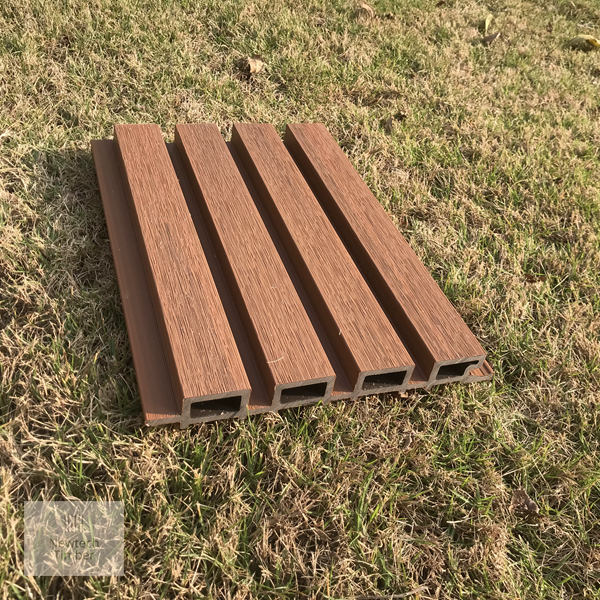
Surface patterns are designed not only for appearance but also for practical performance. Wood grain textures, brushed finishes, and embossed patterns can influence scratch resistance, dirt accumulation, and colour consistency. During production inspection, surface samples are checked for texture uniformity, coating adhesion, and resistance to weather exposure.
The extrusion mould surface directly controls the final decorative effect, meaning mould polishing, texture depth, and pressure control must be carefully managed. A pattern that is too deep may collect dirt and require additional cleaning, while a shallow pattern may lose its visual quality after ageing. Quality teams compare surface performance with design requirements to ensure the finished WPC profile meets architectural expectations.
Material Testing Methods for WPC Window Cladding Profiles
Comprehensive testing combines laboratory analysis with production monitoring. Raw material quality control engineers examine wood fibre content, polymer ratio, moisture level, and additive performance before extrusion begins. During extrusion, engineers monitor melt temperature, pressure stability, cooling speed, and profile dimensions to identify potential defects early.
Finished profiles are tested for density, tensile strength, flexural strength, water absorption, thermal expansion, and weather resistance. These measurements help determine whether the profile design can maintain performance throughout its service life. For export projects, additional testing may include colour stability, fire performance, and environmental resistance according to regional building requirements.
Optimising WPC Profiles for Commercial Projects
Successful WPC profile development requires cooperation between mould designers, production managers, quality supervisors, and installation specialists. A profile that looks attractive but lacks structural support may create problems during construction, while an over-engineered profile can increase costs without providing practical benefits. Engineering decisions must consider manufacturing efficiency, transportation weight, fixing methods, and final building performance.
For architects, contractors, and international buyers, reliable composite cladding around windows depends on controlled profile design and proven testing methods. Careful development of hollow sections, solid reinforcement areas, rib layouts, and surface textures allows WPC manufacturers to deliver products that combine durability, visual appeal, and installation efficiency. These design principles support consistent quality from extrusion production through to completed architectural projects.

