Composite Decking And Railing Compared With Timber Aluminium And WPC Materials
As a WPC extrusion technology engineer, I evaluate outdoor products from the production line rather than only from the finished appearance. Composite decking and railing are engineered systems made through controlled processing of wood fibre, polymers, additives and surface technologies. Compared with traditional timber, aluminium and other WPC materials, the final performance depends heavily on formulation accuracy, extrusion stability and quality management throughout manufacturing.
Timber offers a natural appearance but requires regular maintenance because moisture absorption, cracking, insects and colour changes can affect service life. Aluminium provides excellent strength and corrosion resistance but has a different surface feel and higher thermal conductivity. Modern WPC materials combine wood aesthetics with improved weather resistance, making them suitable for residential terraces, commercial landscapes and architectural outdoor applications. The engineering process behind these advantages starts with raw material preparation.
Material Mixing And Pelletising Control For WPC Production
The first stage of WPC extrusion is raw material mixing. Wood fibre must be screened, dried and controlled for particle size because inconsistent moisture content can create bubbles, weak bonding and unstable extrusion pressure. The polymer component, commonly polyethylene or polypropylene, is blended with coupling agents, stabilisers, pigments and processing aids to achieve the required mechanical properties.
High-speed mixers are used to distribute additives evenly before the compound enters the pelletising process. Pelletising converts the blended formula into consistent granules that improve feeding accuracy during extrusion. For outdoor composite decking and railing, engineers carefully adjust wood fibre ratios and polymer content because excessive fibre may reduce impact resistance, while insufficient fibre can reduce the natural texture and appearance expected from WPC products.
Extrusion Temperature Control And Production Stability
During extrusion, temperature control is one of the most important technical factors. The material passes through different heating zones inside the extruder barrel, where gradual melting and plasticisation occur. Excessive heat can damage wood fibres and cause colour changes, while insufficient temperature may lead to poor mixing and uneven surfaces. Experienced operators monitor barrel temperatures, screw speed, pressure and motor load together rather than adjusting one parameter alone.
The extrusion screw design also affects output quality. A suitable compression ratio, mixing section and conveying structure help achieve uniform material flow. Common production problems include black spots caused by material degradation, surface cracks caused by moisture, unstable dimensions caused by pressure fluctuation and weak bonding caused by poor formulation balance. Continuous process monitoring helps manufacturers maintain consistent board strength and appearance.
Mold Design Cooling Calibration And Surface Treatment
Mold design directly influences the shape accuracy and surface quality of WPC profiles. A well-designed extrusion die ensures balanced material flow across the profile width, preventing warping, uneven thickness and internal stress. For composite decking and railing systems, mould engineers consider drainage channels, fastening structures and dimensional stability because outdoor installation requires precise fitting between components.
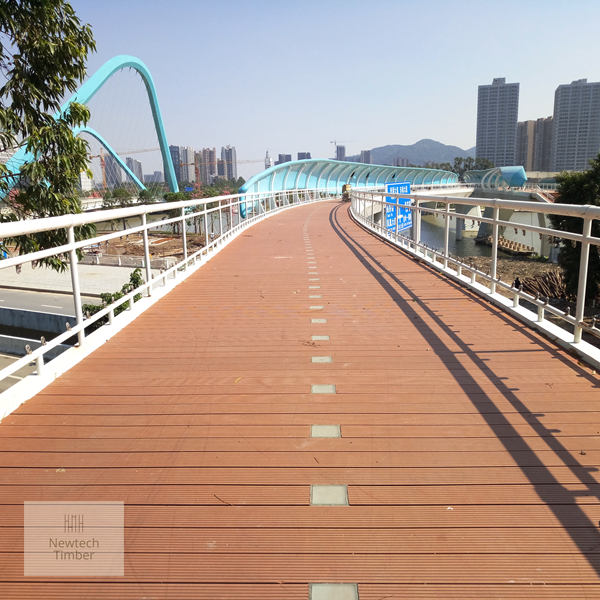
After extrusion, the hot profile enters a cooling calibration system. Vacuum calibration tables and cooling tanks gradually reduce temperature while maintaining the designed dimensions. Cooling too quickly may create internal stress, while insufficient cooling can cause deformation after cutting. Surface treatment processes such as embossing, sanding, brushing and co-extrusion layers improve texture, scratch resistance and UV protection. These technologies allow WPC products to achieve realistic wood grain finishes while reducing maintenance requirements.
Quality Inspection Across The WPC Manufacturing Process
Quality inspection begins with incoming raw materials and continues through every production stage. Engineers test moisture content, density, tensile strength, impact resistance, colour stability and water absorption. Production teams also inspect profile dimensions, surface consistency and locking structures to ensure the finished products meet technical specifications.
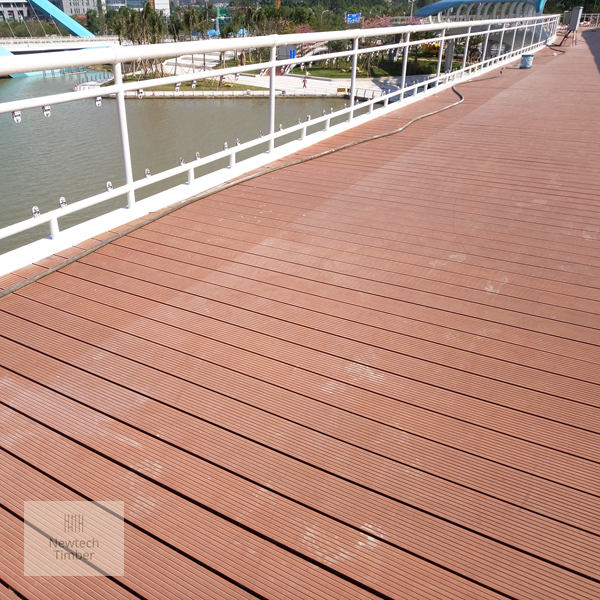
For international markets, manufacturers must consider different climate conditions, installation methods and customer expectations. Outdoor WPC product designers, application engineers and installation technicians work together to improve practical performance. Packaging engineers also protect profiles during transportation because damage during export handling can affect customer satisfaction and project efficiency.
Engineering Advantages Of Modern Outdoor WPC Systems
Modern WPC extrusion technology has developed beyond simple wood replacement. Advanced formulas, precise extrusion equipment and improved mould structures allow manufacturers to create decking, railing, fencing and architectural profiles with reliable performance. Compared with timber, WPC requires less maintenance, and compared with aluminium, it provides a warmer surface texture that suits outdoor living spaces.
For factory owners, export specialists and material consultants, understanding the complete manufacturing process helps identify reliable suppliers and suitable product solutions. The quality of composite decking and railing is determined long before installation begins. Raw material selection, engineering control, production experience and inspection systems together define the durability and appearance of the final outdoor structure.

