Global Demand for Outdoor WPC Materials
The outdoor building materials market is moving towards products that combine natural appearance, long service life, and lower environmental impact. Composite decking, WPC wall cladding, fencing systems, pergolas, and landscape structures are gaining attention across Europe, North America, the Middle East, and Asia Pacific. As an international market research analyst focusing on outdoor materials, the growth pattern shows that buyers are no longer selecting products based only on price. They are evaluating weather resistance, manufacturing consistency, design flexibility, and sustainability credentials.
Wood plastic composite production has developed from simple profile extrusion into a precision manufacturing process that supports complex surface finishes and customised applications. Among these developments, wood plastic laminate technologies are becoming increasingly relevant because they allow manufacturers to create decorative layers, improve colour stability, and provide a more refined appearance for premium outdoor products. This trend is creating opportunities for factories that can control raw materials, extrusion parameters, and finishing processes with high accuracy.
Extrusion Process Control for WPC Product Quality
The extrusion process determines the structural performance and visual quality of outdoor WPC products. Manufacturers begin with carefully selected wood fibres, polymers, additives, and processing agents. The moisture content of wood powder must be controlled because excessive moisture can cause surface defects, internal voids, and inconsistent mechanical strength. Raw material quality control engineers are therefore focusing more on testing systems that measure particle size, density, and material compatibility before production begins.
During extrusion, temperature management, screw speed, pressure control, and cooling methods directly influence the final profile. Composite decking boards require stable dimensions to prevent installation problems, while wall cladding and fencing profiles need consistent thickness and surface quality. Advanced factories are adopting automated monitoring equipment to maintain production stability across long manufacturing runs. These improvements support international buyers who require reliable supply for large residential, commercial, and landscape projects.
Surface Technology and Design Development for Outdoor Applications
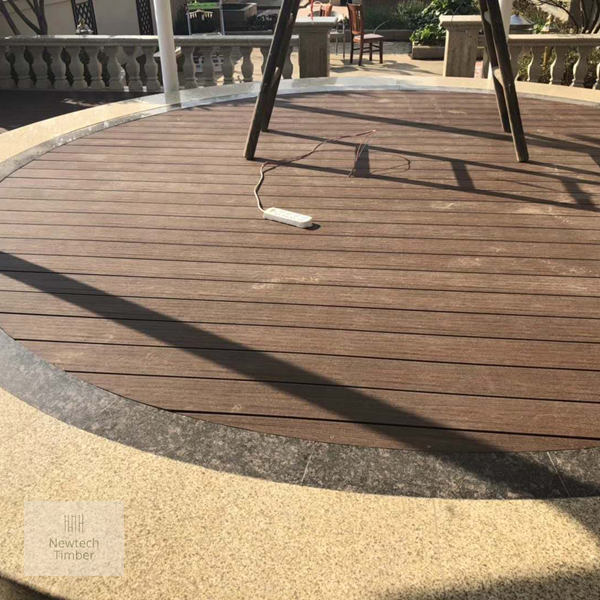
Modern outdoor WPC products are increasingly focused on appearance as well as performance. Embossed wood grain textures, co-extruded protective layers, and advanced colour systems help manufacturers create products that resemble natural timber while reducing maintenance requirements. Wood plastic laminate solutions can enhance decorative effects by combining a durable core structure with an attractive surface layer designed for outdoor exposure.
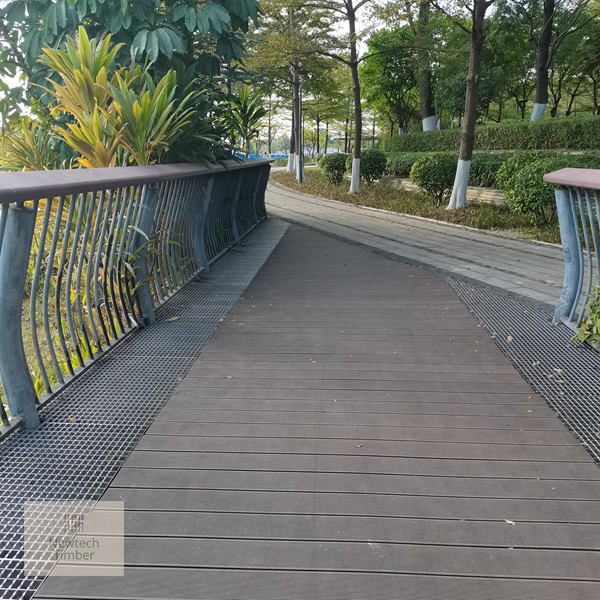
Outdoor WPC product designers and WPC application engineers are responding to changing architectural preferences. Composite decking is being used in hospitality spaces, residential gardens, and public areas. WPC wall cladding is expanding in modern building façades because architects seek lightweight solutions with stable performance. Pergolas, fences, and landscape products are also benefiting from customised profiles that match regional design styles. This market direction encourages manufacturers to invest in flexible extrusion lines and mould design capabilities.
Future Opportunities in International WPC Markets
Global market research indicates that demand for sustainable building materials will continue influencing purchasing decisions. International distributors and construction companies are searching for suppliers that can provide consistent quality, technical support, and OEM customisation. Export specialists are increasingly required to understand regional standards, packaging requirements, installation methods, and climate conditions affecting product performance.
For WPC factory owners and industry experts, future competitiveness depends on improving production efficiency while expanding product categories. Manufacturers that can develop decking systems, cladding solutions, fencing components, and landscape accessories within the same production network may access wider international opportunities. Investment in extrusion technology, quality inspection procedures, and product testing will become more important as global customers demand longer warranties and clearer performance information.
Manufacturing Strategies for Long Term Market Growth
The next stage of outdoor WPC development will rely on cooperation between material suppliers, engineers, designers, and international buyers. Production management teams need to coordinate extrusion capacity, mould development, inventory planning, and after-sales support to meet diverse project requirements. Quality inspection supervisors will continue to play an important role by ensuring finished products meet dimensional, strength, and appearance standards before shipment.
As sustainable construction expands worldwide, WPC manufacturers have opportunities to create higher value products rather than competing only through volume production. Companies that combine technical expertise with market awareness can develop solutions suited for different climates and architectural needs. The future of outdoor composite materials will be shaped by precise manufacturing, innovative surface technologies, and the ability to deliver dependable products for global building projects.

