Outdoor WPC Decking Installation Guide and Formula Performance Principles
As a WPC formulation development engineer, I approach decking performance from the material structure before considering installation details. A successful outdoor WPC decking system depends on a carefully engineered balance between wood fibre, polymer content, additives, processing conditions, and fixing methods. The board must withstand moisture, ultraviolet exposure, temperature changes, foot traffic, and long-term outdoor ageing without losing dimensional stability or surface quality.
For decking, wall cladding, fencing, pergolas, and landscape products, the formula design begins with selecting suitable raw materials. Wood fibre provides natural appearance, stiffness, and a textured surface, while plastic components provide water resistance and bonding strength. The correct ratio is not simply about adding more wood content. Excessive fibre can increase water absorption and reduce impact resistance, while excessive plastic may raise costs and create a less natural appearance. Professional manufacturers adjust the composition according to application requirements, climate conditions, and expected service life.
Balancing Wood Fibre and Plastic Ratio for Outdoor Applications
A typical WPC decking formulation requires precise control of wood fibre percentage and polymer ratio. Higher wood fibre levels can improve rigidity and reduce material costs, but the fibres need effective encapsulation by plastic to prevent moisture penetration. For products installed in rainy or coastal regions, a higher polymer proportion is often selected to improve resistance against swelling, cracking, and biological degradation.
The choice of plastic also influences extrusion behaviour and final product performance. Polyethylene is widely used for outdoor decking because it offers good flexibility, impact resistance, and weather durability. During development, engineers evaluate melt flow characteristics, compatibility between materials, and processing temperature to ensure stable extrusion. Cost control is achieved by optimising the formula rather than reducing key ingredients that protect product lifespan.
Additive Systems That Improve WPC Durability
Additives are essential components in high-performance WPC products. Coupling agents improve the connection between hydrophilic wood fibres and hydrophobic polymers, creating stronger internal bonding. Without effective coupling, boards may experience reduced strength and surface defects after outdoor exposure. Lubricants are also carefully selected to improve extrusion efficiency and maintain a smooth surface finish without weakening the material.
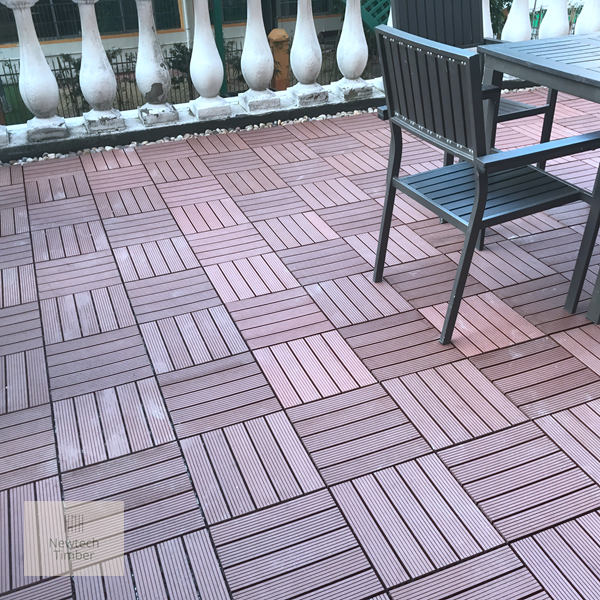
For outdoor WPC decking and other exterior products, UV stabilisers, antioxidants, pigments, and impact modifiers are commonly included in the formula. UV stabilisers slow colour fading caused by sunlight, while antioxidants protect polymers from thermal and oxidative ageing. High-quality pigments maintain appearance consistency across production batches. The additive package must be balanced with cost targets because unnecessary additions increase expenses without always improving practical performance.
Professional Fixing Methods for Long-Term Decking Stability
Even a well-designed WPC board requires correct installation to achieve its expected lifespan. Professional fixing methods focus on controlling movement caused by temperature expansion and contraction. Stainless steel clips, hidden fasteners, and suitable screw systems are commonly used because they maintain board alignment while allowing controlled expansion gaps.
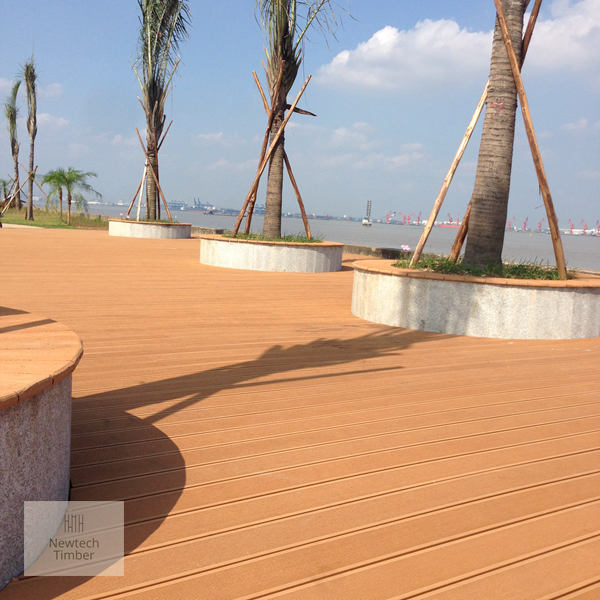
Installation technicians should consider joist spacing, ventilation, drainage, and fixing positions before placing boards. Incorrect spacing can create excessive stress, while insufficient drainage may increase moisture exposure underneath the decking surface. For commercial projects, installation specifications should be prepared together with factory recommendations because board profiles, material density, and reinforcement structures can vary between manufacturers.
Quality Control From Production to Finished WPC Products
WPC quality control begins during raw material inspection and continues throughout extrusion, surface treatment, and packaging. Engineers monitor fibre moisture content, particle size distribution, polymer quality, and additive consistency before production begins. During extrusion, temperature zones, screw speed, and cooling systems are adjusted to maintain stable board dimensions and mechanical properties.
Finished products are tested for water absorption, impact strength, bending performance, colour stability, and dimensional change. These evaluations help manufacturers confirm whether the formula meets requirements for decking, cladding, fencing, pergolas, and landscape applications. Strong quality systems also support OEM projects where international customers require specific colours, profiles, packaging standards, and installation instructions.
Designing WPC Products for Global Outdoor Markets
Modern WPC development requires a connection between engineering performance and market expectations. Designers, architects, and landscape consultants increasingly request materials that combine natural appearance with low maintenance and sustainable characteristics. A carefully developed formula allows manufacturers to create products that meet different regional requirements without unnecessary material waste.
For international sales teams and factory owners, understanding the relationship between formula design and application conditions is essential. A decking profile designed for a private garden may require different performance targets from a large commercial walkway or a high-exposure coastal project. By controlling wood fibre quality, plastic ratio, additive selection, and professional fixing methods, WPC manufacturers can produce reliable outdoor solutions with consistent appearance and extended service life.

